

Understanding Dental Implants Cost in Kissimmee, FL


By Brisa Dental Arts
It’s important to understand how missing teeth can affect more than just your smile; they can also affect chewing and speaking, as well as your overall oral health. Therefore, if you live in Kissimmee, Florida, you must explore tooth replacement options. Dental implants are a unique way to provide a long-term solution for missing teeth, offering stability, comfort, and a natural appearance. In this blog, we will break down the cost of dental implants, what affects the pricing of dental implants, and how to properly plan for this investment in your oral health.
Individual Factors That Affect the Cost of Dental Implants
Dental implants are not something that works for everyone, since many factors can affect pricing on dental implants:
1. Number of Dental Implants: The cost of replacing a single dental implant will be less expensive than replacing multiple dental implants or a full arch.
2. Type of Implant Used: Standard dental implants, mini dental implants, and All-on-4 or All-on-6 systems each have different cost levels.
3. Pre-Existing Conditions: Sometimes, there may be conditions such as gum disease or bone loss that will require additional treatment, such as bone grafting, before dental implants can be placed.
4. Material Selection: The type of post used will also affect the price. For example, titanium posts and zirconia posts will vary in price.
5. Location and Dental Practice: Local dental practices vary in dental implant pricing based on the experience of the practitioner, as well as the technology used in the office.
Generally, the average cost of dental implants in Kissimmee, FL, can be between $3,000 and $6,000 per tooth, which includes the surgical placement and restoration of the tooth. However, for more complex dental implants, there may be an additional cost.
Bone Grafting and Additional Preparations
Those who lack sufficient jawbone may need bone grafting before being fitted for an implant, as this provides a sturdy base for your new implant and can slightly raise the overall cost. Additional preparatory procedures could include extractions, periodontal treatment & sinus lifts depending upon your needs.
Understanding Implant Dentistry Prices
Implant dentist costs can be broken out into the following expenses:
- Surgical Fees: Implant post placement.
- Restorative Costs: Abutment and crown fabrication.
- Imaging & Scans: 3D imaging or CBCT scans.
- Follow-Up Care: Routine checkups for healing and integration.
On average, the cost of a single implant ranges from $3,000 to $5,500, while full-arch solutions like All-on-4 can cost from $20,000 to $35,000.
Risks and Considerations
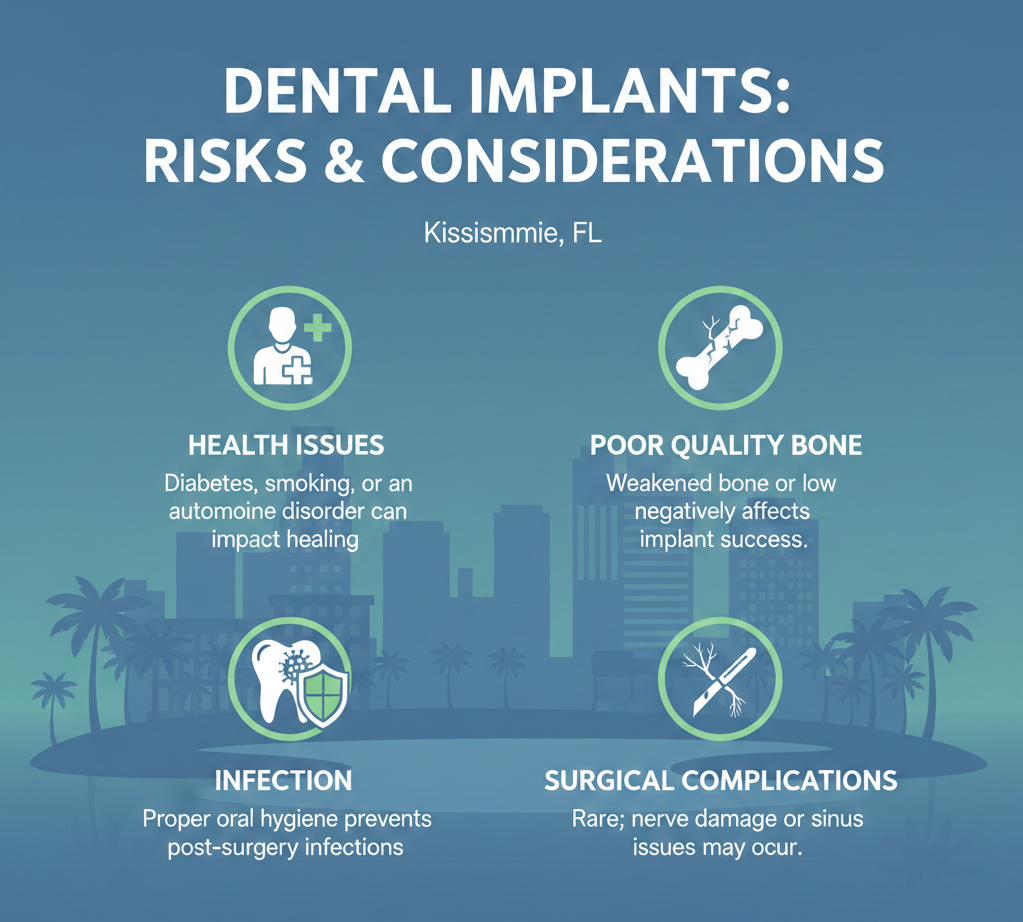
Understanding risks associated with dental implants, they are generally very successful. Some factors to take into account when getting dental implants in Kissimmee, FL:
- Health Issues: Diabetes, smoking, or an autoimmune disorder, etc., could impact your healing.
- Poor Quality Bone: Weakened or poor-quality bone, or low bone density, can negatively affect the success of an implant.
- Infection: After surgery, proper oral hygiene will help prevent infections.
- Surgical Complications: Rare but may occur due to nerve damage or sinus issues.
A qualified dentist can evaluate you and help you avoid all of the above risk factors.
Recovery and Diet After Implant Surgery
Now that you have had a dental implant, you will need to make some changes to your eating habits during the healing process.
- Eat A Soft Diet: Examples include yogurt, mashed potatoes, smoothies, and soups.
- Do Not Eat Hard or Sticky Foods: Keeping these foods away from the surgical site helps prevent disturbing the surgical site.
- Drink Lots of Water: It will help heal the tissues in your mouth.
- Adhere to Oral Hygiene Instructions: Clean and rinse as recommended by your dentist.
For many patients, it can take up to several months for an implant to fully integrate with bone after an implant has been placed. If you follow all of the above guidelines, your chances of achieving a successful outcome and enjoying long-term success will increase dramatically!
Planning For The Cost Of Dental Implants
If you understand the costs of dental implants and the costs associated with other dental procedures, then you can plan better for your total cost of the dental implant procedure.
The following factors may help you plan for your financial commitment to the dental implant procedure:
- Insurance Plan Benefits for Dental Implants: Some dental plans cover part of the cost of dental implants.
- Flexible Finance Options for Dental Implants: Many dentists offer their patients the opportunity to make monthly payments.
- Long-Term Value: Most dental implants can last for 10-20 years, making them a cost-effective solution.
Having an idea of the costs of dental implant procedures will allow the patient to make a fully informed decision about their oral healthcare.
Conclusion: Here is Your Next Step in Restoring Your Smile
Investing in dental implants in Kissimmee, FL, will improve your ability to eat, the appearance of your teeth, and your overall confidence. At Brisa Dental Arts, we will provide patient support and care from your first consultation to your post-operative care. By being clear about your costs for dental implant procedures and creating an adequate plan for your total financial commitment, you will make an informed decision that is appropriate for your oral health and lifestyle.
Contact Brisa Dental Arts today to schedule your consultation and learn more about the costs of new teeth, dental implant options, and payment options.
Common Questions About Dental Implants
How much are implants for a single tooth?
A single dental implant in Kissimmee, FL, typically ranges from $3,000 to $6,000, including the post, abutment, and crown. Costs vary depending on pre-existing conditions and material choices.
Is bone grafting always necessary?
Not always. Bone grafting is recommended if your jawbone lacks sufficient density to support the implant, ensuring a stable foundation and long-term success.
What are the main risks of dental implants?
Risks include infection, slow healing, or implant failure, particularly for patients with diabetes, smoking habits, or poor bone density. Proper evaluation minimizes these risks.
How long does recovery take?
Initial healing takes a few weeks, but complete osseointegration may require 3–6 months. Following care instructions accelerates recovery and improves outcomes.